about
Louis Grove
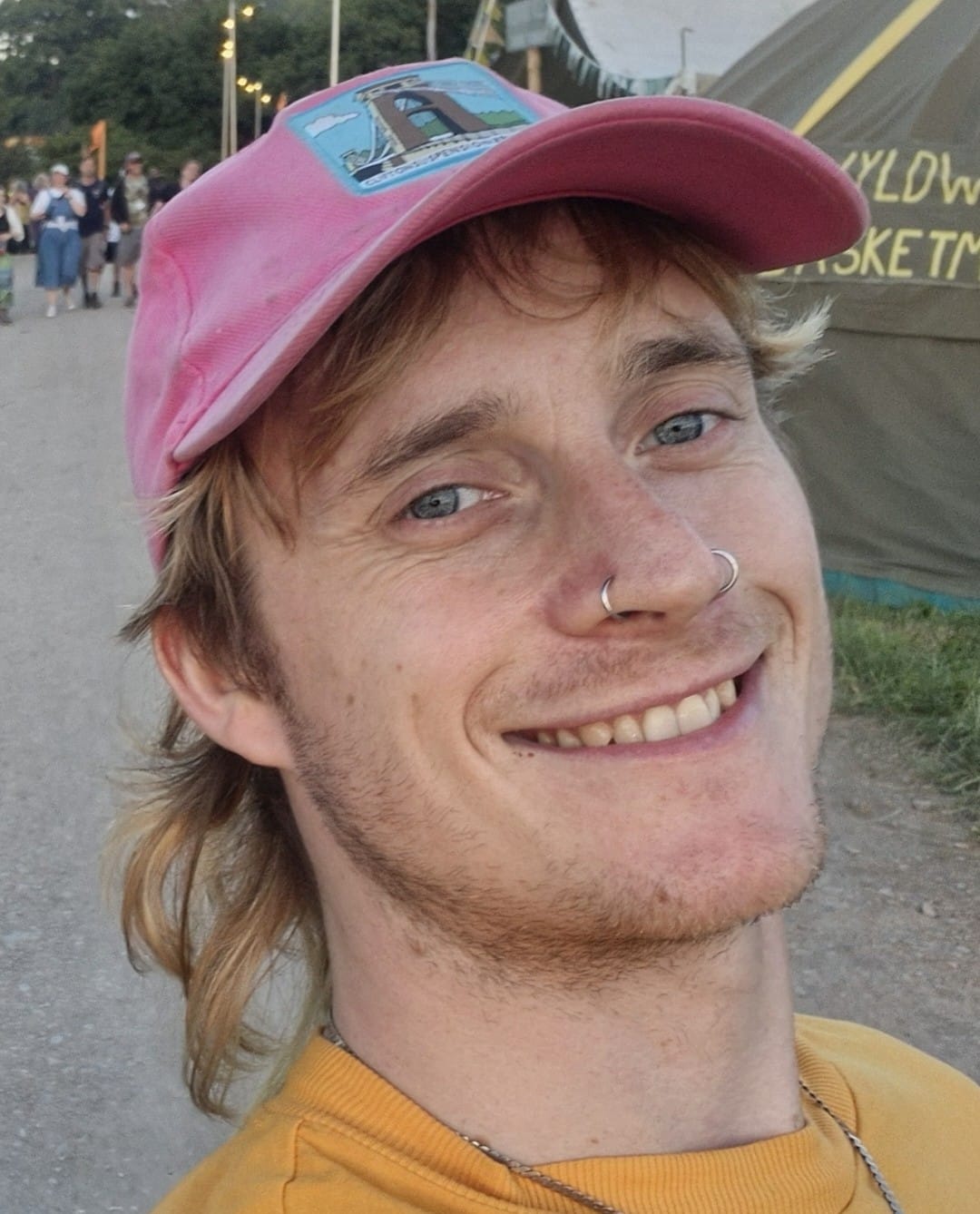
Curiosity is the thread. Why do people do what they do? What shapes their experience and how? How do dynamics change at the level of groups and societies? What happens when systems self-interact? Questions like these have driven me from evolutionary biology through anthropology to user research and AI.
Through-line
My undergraduate degree was in evolutionary biology. I wanted to understand how the diversity and complexity of the living world emerges from a long, blind, recursive process — design without a designer. That question scaled up naturally: how do the same forces shape an individual person's behaviour and experience? Psychology answers some of it, but Social Anthropology answers it at the level of groups, cultures, and societies — which is why I went to SOAS, University of London to read for an MA after my Bsc in Evolutionary Biology.
User research turned out to be the work form of the same question, applied. Seven years in, mostly at startups in dynamic, emerging tech markets where systems are visibly self-organising and the playbooks haven't been written. It's a great place to be for someone with my skills and interests.
How I work
Mixed methods, with the rigour and the flexibility to choose the right tool for the question. Choice-based conjoint when pricing decisions are on the line. Latent class analysis when the segments aren't obvious. Ethnographic interviews when the answer is shaped by context I can't see from a survey. R, Python, SQL when I need to query the warehouse myself rather than wait for a data team. Increasingly, vibe-coded prototypes when prototyping yields the fastest answer.
The discipline I keep coming back to: research stops being a separate act when you instrument the system at the level of every interaction.When hooks fire on every event. Threads emerge. Clusters surface gaps. The same agent runtime that consumes a tool produces evidence about it. The work then is to listen carefully to what's actually happening, frame it for the people who need to act on it, and build the next loop.
The same discipline applied in reverse: every system I build, I build with attention to how it can mislead or be abused — intentionally or otherwise. Read-only by default. Anonymisation before ingest. Human-in-the-loop fallback for the queries the system shouldn't answer alone. The instrumented surface that produces evidence about user need is also the surface that produces evidence about the system's own failure modes.
Work I'm proudest of
A framework I developed at Cleo for understanding user behaviour, experience, and decisions through the lens of overlapping user constraints. It became a shared mental model across the company — shaping NPD, UX, market research, personalisation, and product strategy. It changed how decisions got made, not just which decisions. The same lens, applied to a different problem, is in the intersectional decision-support tool.
This moment
The systems I find most interesting in the world right now are AI systems that learn from how people use them. They're the clearest live example of the thing I've been curious about my whole adult life: evolving, self-improving, recursively shaped by the people and agents inside them. The companies building them carry an obligation I take seriously — to make these systems broadly useful and broadly trustworthy, so more people get to spend more of their time on the things that matter to them. I want to do the research that helps make that real.
Personal
Summers often revolve around festivals — Glastonbury is the highlight, every year except the fallow. I'm from the Lake District (North West England) so love spending time in the mountains, lakes and forests. For fun I play music (mostly folk and acoustic) and chess, build agents that play deckbuilders, read, travel, and go on very long walks.
I'm based in London and open to relocating to the US (SF, NYC, Seattle).